
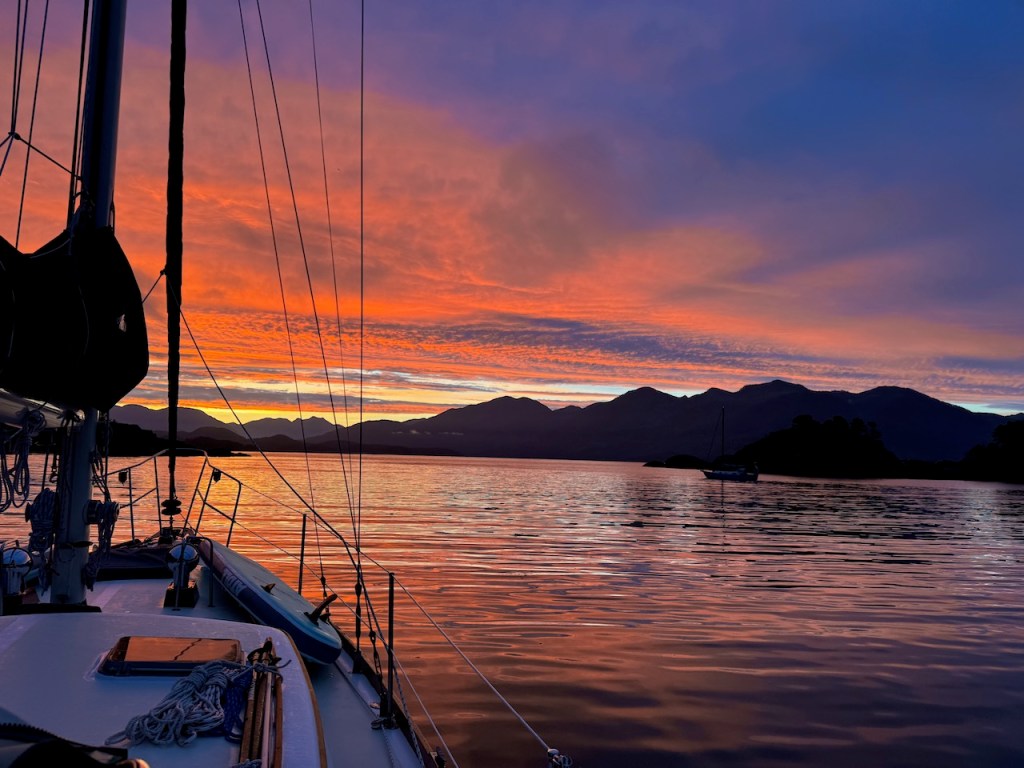
After spending several glorious days in heat and sunshine in one of the most beautiful anchorages this trip, Bacchante Bay, it’s been raining hard for two days. We are anchored in a pretty little cove in Clayoquot Sound waiting it out. The big news is we finally saw a bear! I’m posting some pictures of our stay in Bacchante Bay, Tranquilito Cove—just before the rain started— and the bear. Other than that, there’s not much to tell. David and I are enjoying life relaxing and reading. So, I’d like to go back to a post I started in July but never finished because I needed it to percolate, I think.
We head to Tofino tomorrow.
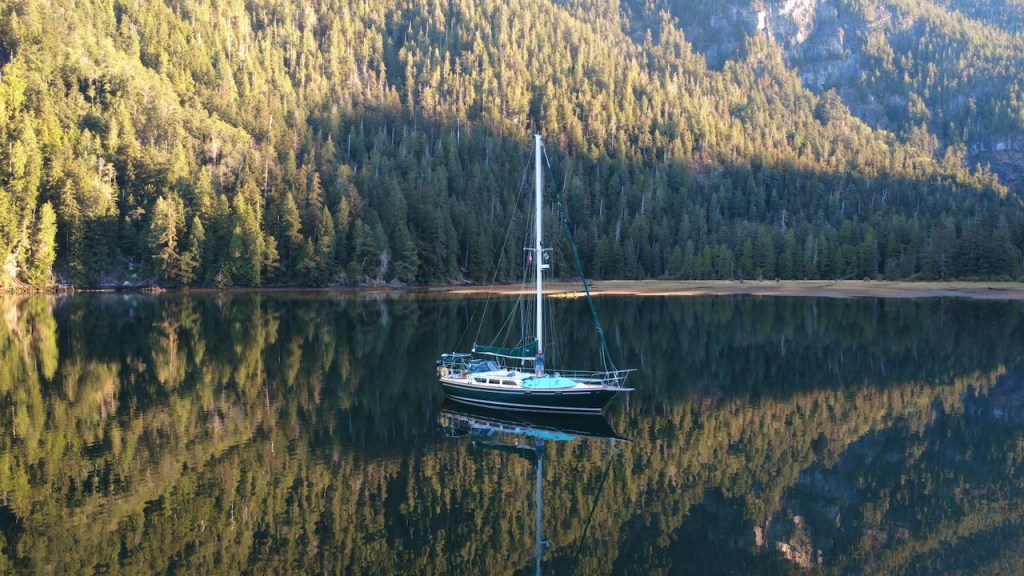
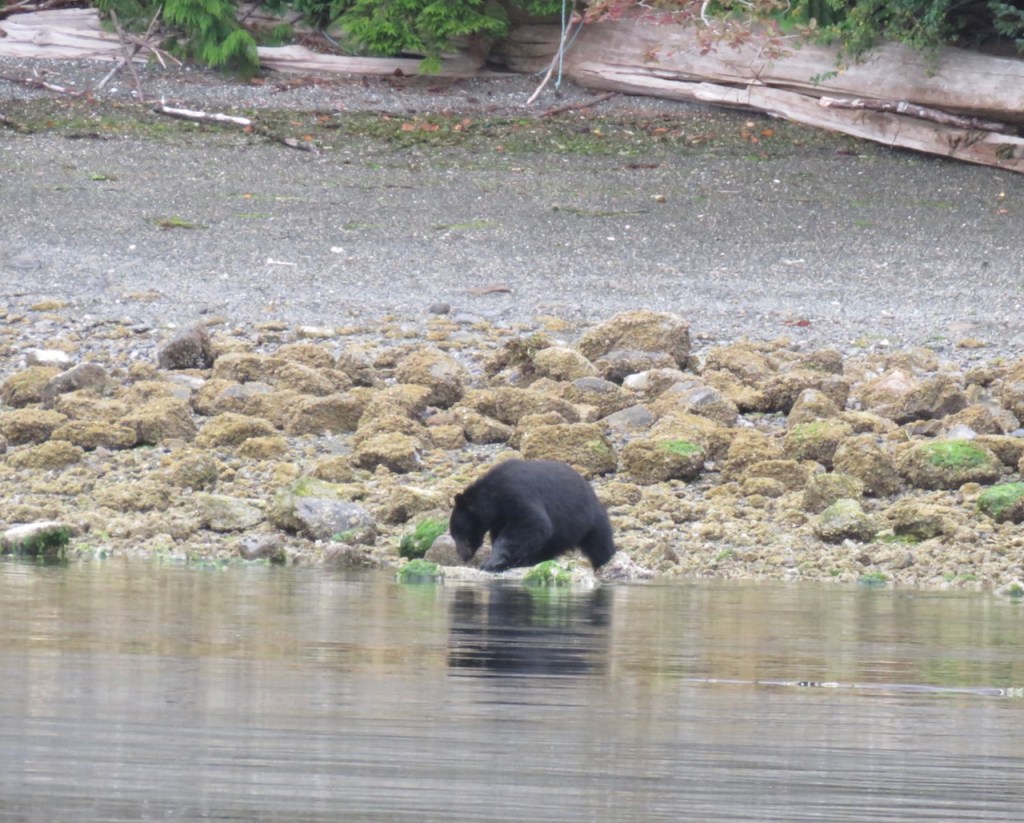
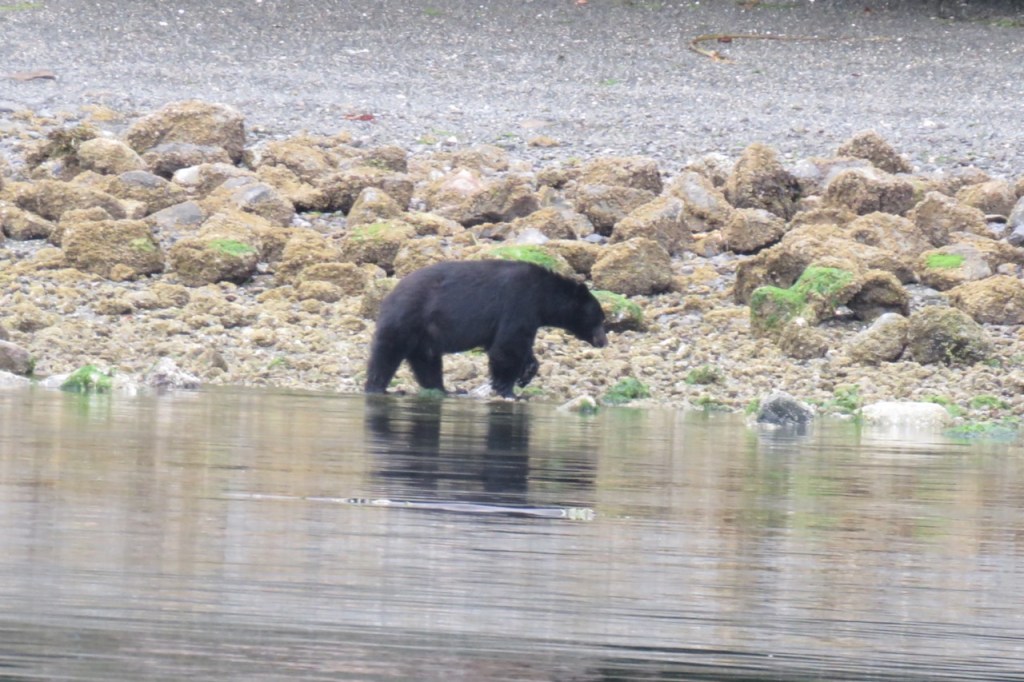
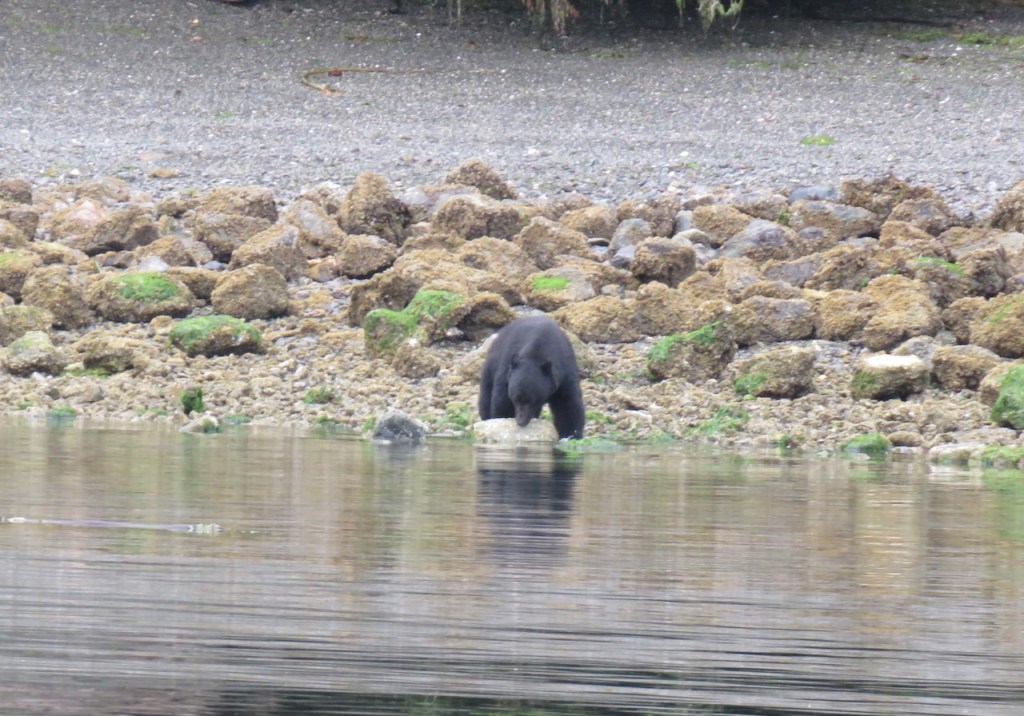
Bear!
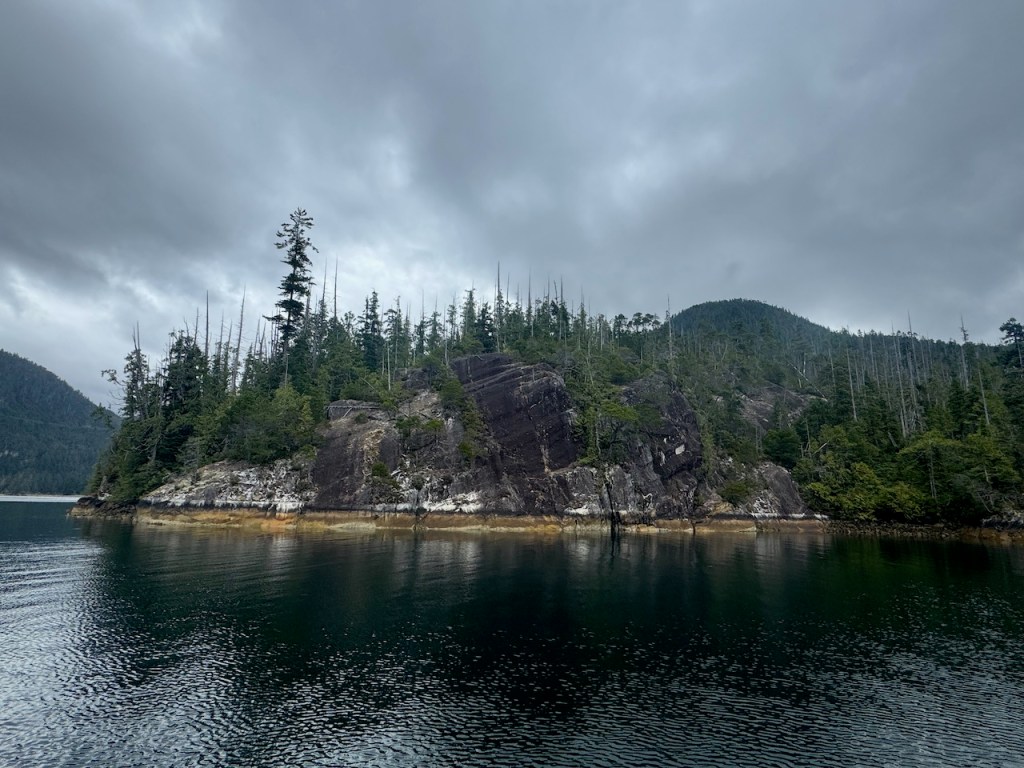
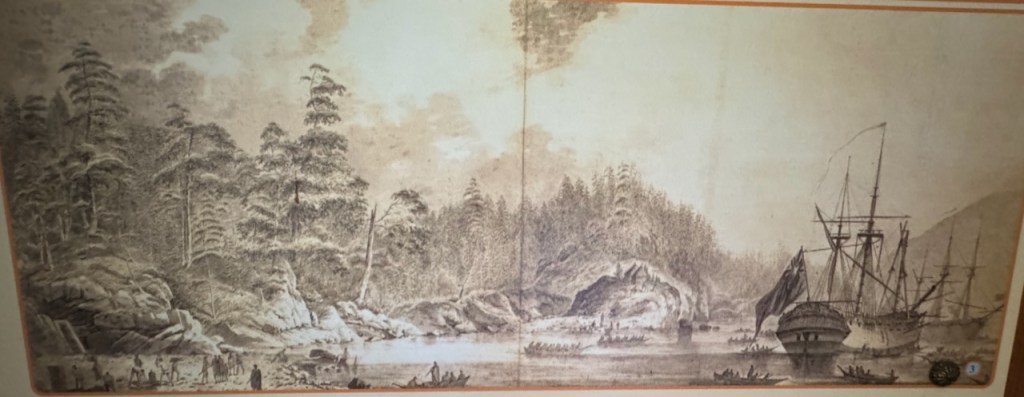
Exploration of Canada’s Pacific Northwest coast and trading began in the mid-eighteenth century—the explorers initially welcomed by the local native people. By 1776 the first wave of smallpox epidemics hit. Many more waves would follow, killing 30% to 70% of the native population in some areas. The 1862 epidemic is estimated to have killed two-thirds of the British Columbia native population. Death rates of coastal tribes from the Puget Sound to Sitka, Alaska exceeded 50%.
The merchants and traders such as Hudson Bay Company bring more than disease. Rape and enslavement of the native people was rampant. Treaties are signed and broken by the European colonialists and their lands are taken away. Then came the Methodist missionaries in 1859, determined to convert the natives to Christianity. The first residential schools are opened to “civilize” native children in 1861. Children are forcibly taken from their parents to live at residential schools where many are abused, fall sick and die, and some just disappeared. They were prohibited to speak their native language or practice traditional ways.
It’s enough to make me weep.
We stood on the site of St. Michael’s residential school in Alert Bay—established in 1882 by the Anglican Church—which operated until 1974. The building was finally demolished in 2015. This happened in the U.S. as well. Canada, however, seems to be doing better right now at reckoning with this shameful past.
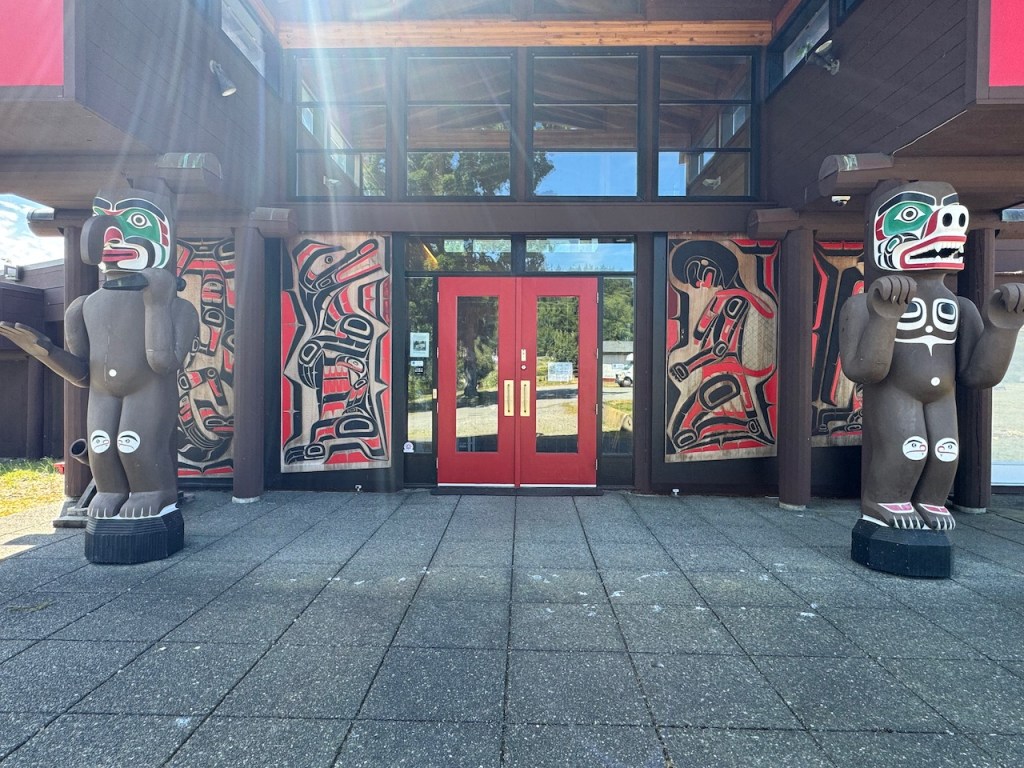
Alert Bay on Cormorant Island, which is just north of Vancouver Island, is part of the ancestral home of the North Coast Kwak´wala people. It’s also the home of the U’Mista Cultural Centre—renowned for housing one of the finest collections of carved masks and other artifacts of the Kwak´wala people—many of which, were repatriated in 1978 after being confiscated in 1921 following a traditional potlatch on Village Island. U’Mista states its mandate is “to ensure the survival of all aspects of the cultural heritage of the Kwakwa̱ka̱ʼwakw.” The exhibits were fascinating and heartbreaking. As was walking through the village of Alert Bay, filled with pride and poverty.
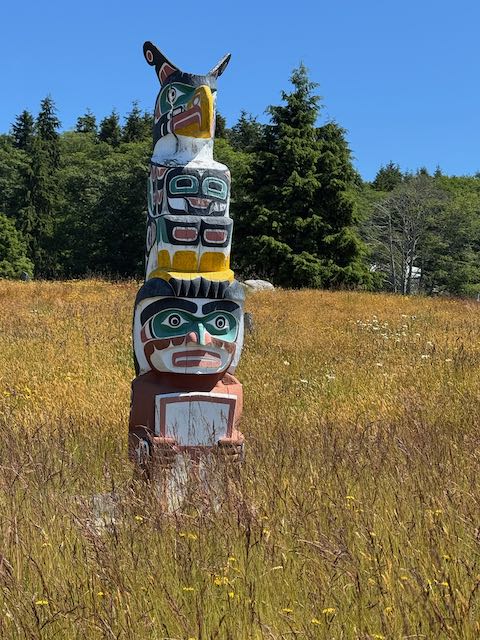
Some of the simple homes had magnificently carved totems in their yards. Other homes were melting into the ground, abandoned, or barely cared for. We stood outside the ‘Namgis First Nation burial ground, awed by the variety of carved memorial poles in various degrees of deterioration. The plaque at the site says, “Some families purposefully let the poles fade, fall down and decompose as part of the natural cycle of life and death. Some families believe that the ancestor’s spirit has left once the totem falls down. Other families prefer to install new poles or repaint the old ones as they fade.”
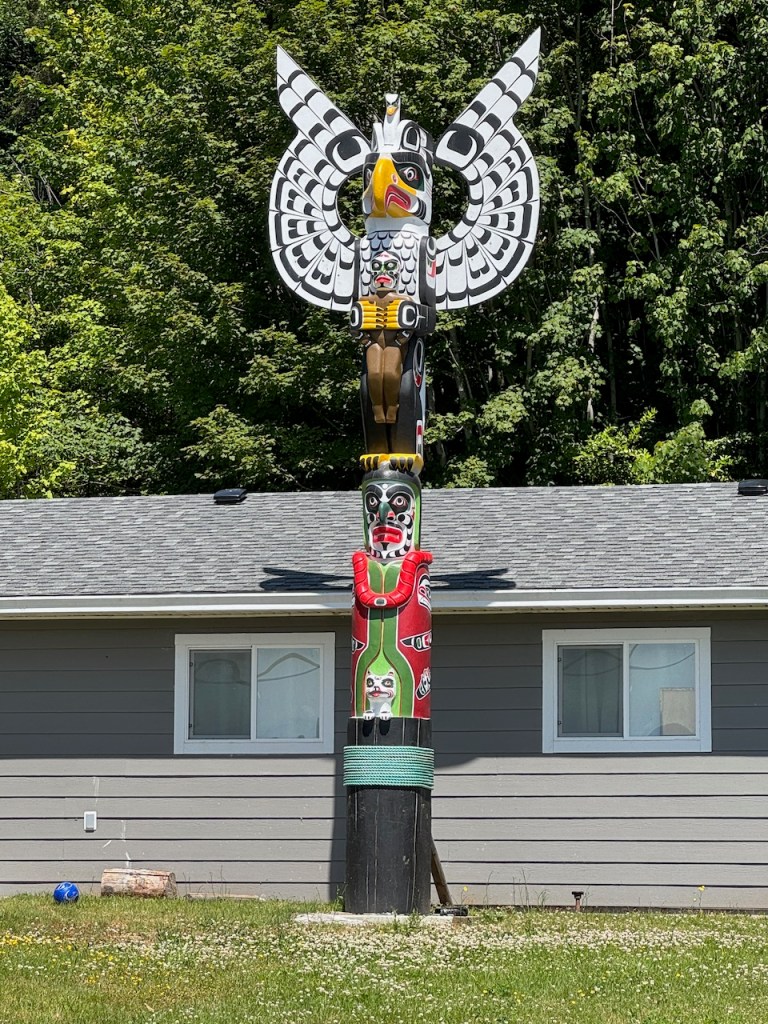
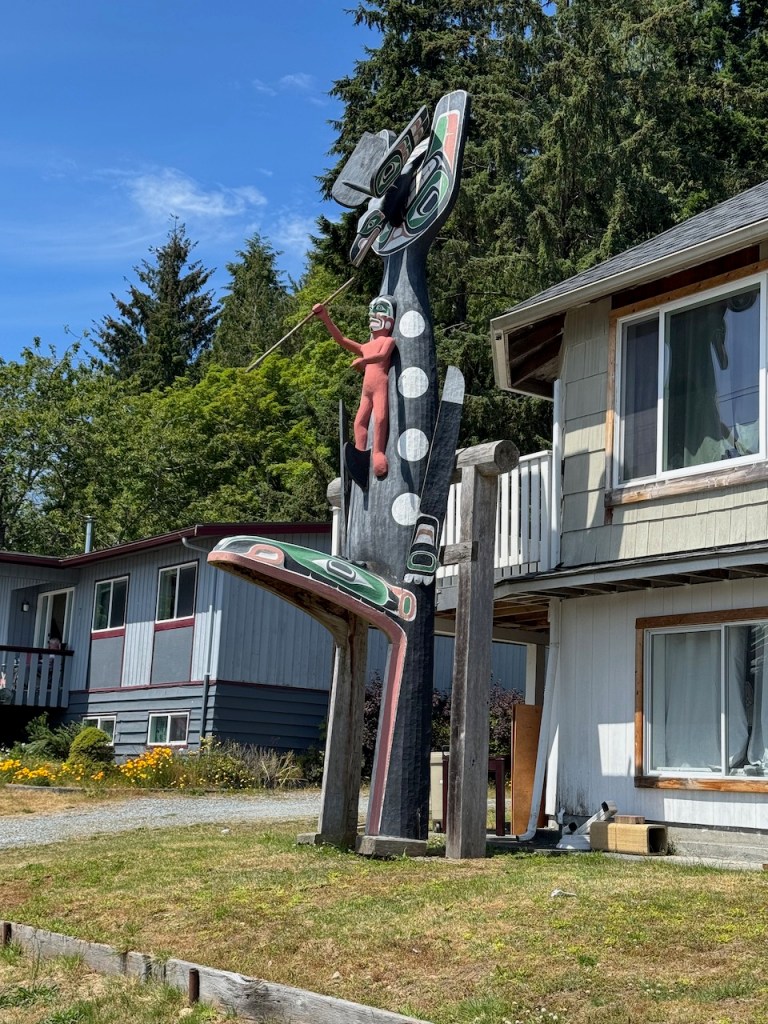
Totems in front of modest homes in Alert Bay.
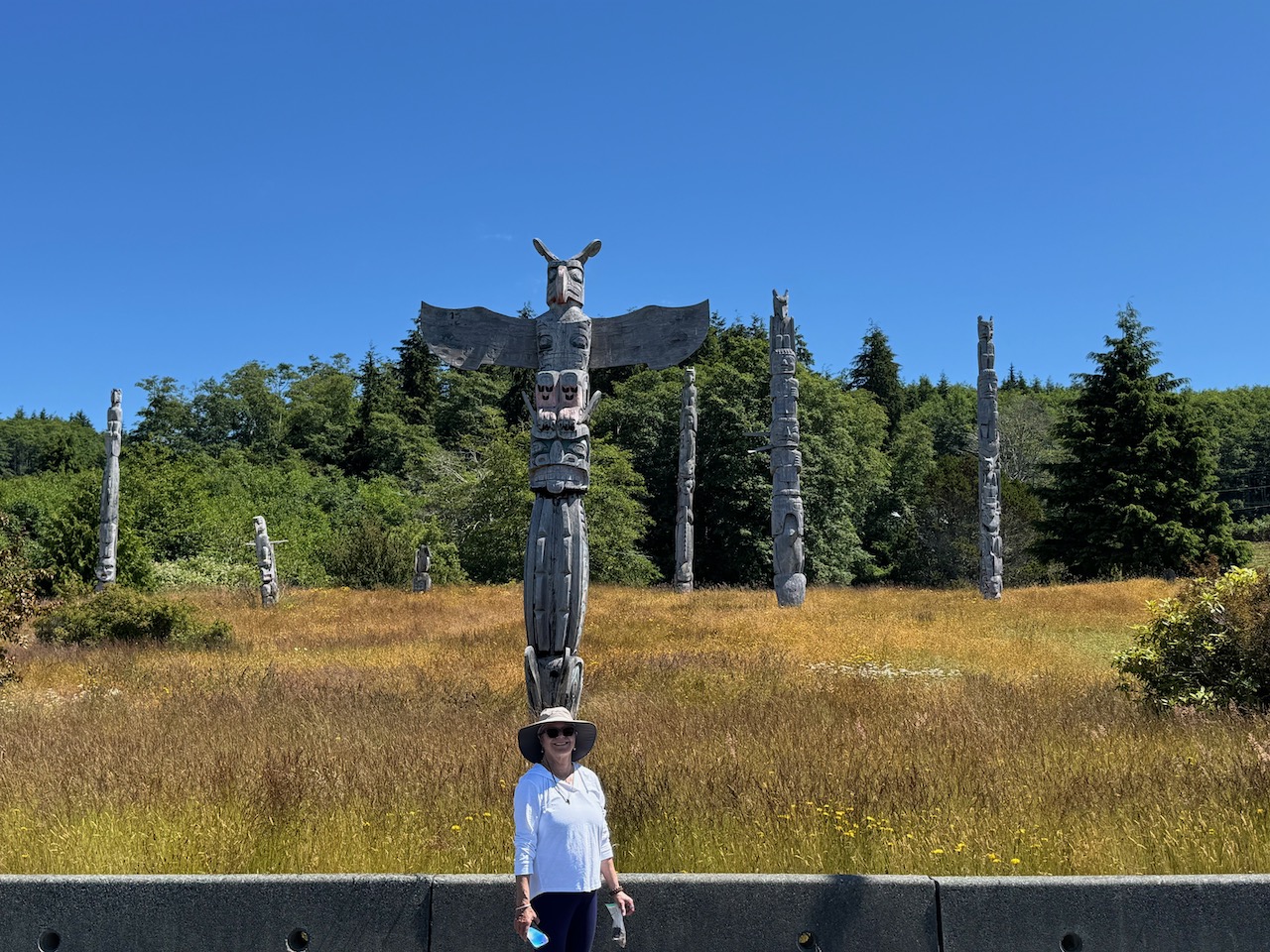
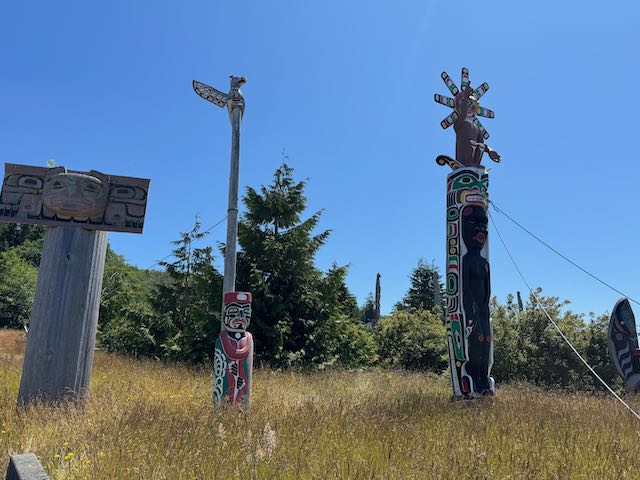
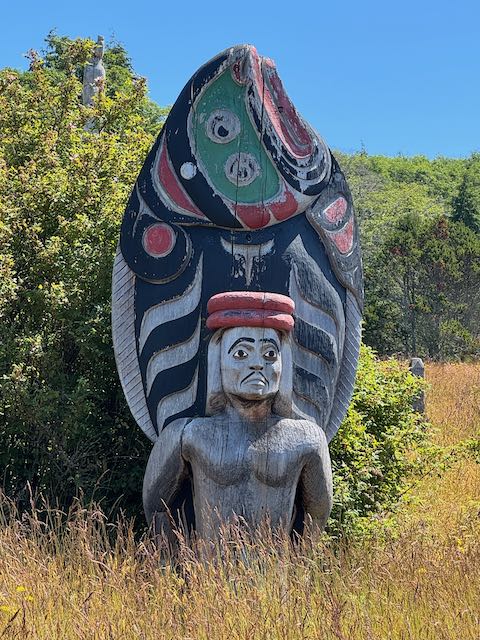
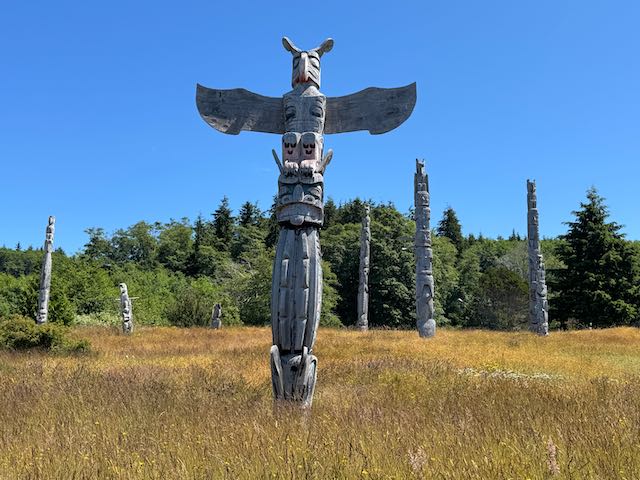
Totems in the ‘Namgis First Nation burial ground.
We left feeling unsettled. We were disturbed over the painful history of what the First Nation people endured and the magnitude of their loss. And the scars run deep with rampant addiction, poverty, obesity, and ill health. It will take generations to heal. It’s not that we did not know about these things. But being here, standing on their ancestral lands and navigating their waters, heightens our awareness. I guess you could say we reached another level of “woke,” which I do not consider negative as some in our society try to paint it.
And it touched a nerve with what’s happening in the U.S. right now—the effort to erase the violence and damage brought upon the native people, white-wash slavery, Jim Crow, and all the injustices on those perceived as “others,” and calling us who care “woke,” as a slur.
It makes me feel ill.
And I think about what I am going to do when I get home. How I can best stand up for my values and live them in a country I was born in and love, but currently horrifies and offends me.
Yes. Thoughts are returning to home. We are just two and a half weeks away.
Sharing a song and video from Seattle singer and songwriter Leroy Bell, who I had the privilege of meeting. We profiled him in a story for 3rd Act Magazine. He eloquently puts words to the feelings I’m struggling with.

 Oceana Voyage
Leave a comment