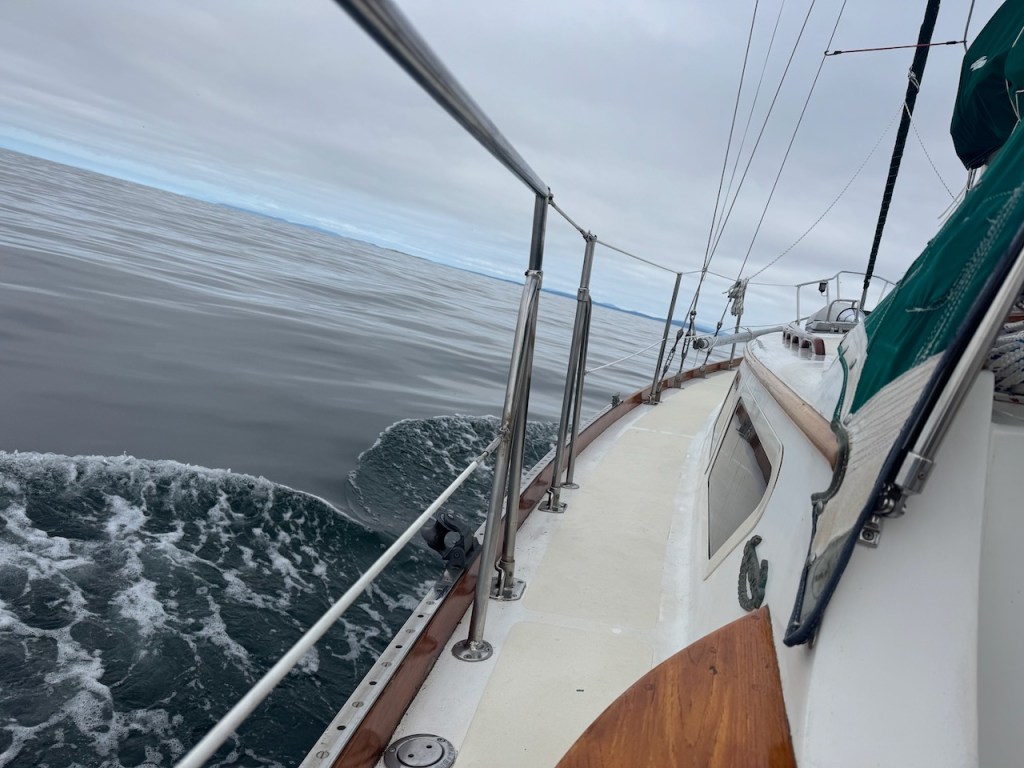
We cross the Strait of Juan de Fuca to get from Port Townsend on the Olympic Peninsula to the San Juan Islands. It’s considered a narrow channel—11 to 17 miles wide—but it carries all the water that fills the Puget Sound and Salish Sea from the Pacific Ocean—and that’s a lot of water. It’s a big water crossing for us. The currents can be fierce and the Strait can act as a mighty wind tunnel from west to east—with the mornings usually starting out calm and winds often building to gale force by the late afternoon. (This is the wind we ducked into the marina to avoid last night.) It gets really gnarly when the winds oppose the currents, e.g. the current is flowing west and the winds are blowing from the west. This can result in dangerous pyramid-shaped wind waves and chop. No fun. Needless to say, we have a healthy respect for crossing this body of water.
In planning the crossing, we must consider the wind direction and strength and the current direction and strength to time the crossing and decide to “go” or “no go”. It never seems to work out perfectly—we’re either fighting current early in the crossing to get a boost from it later, or visa versa. And there can be some dangerous riptides off Point Wilson as we are leaving Port Townsend. This is where the currents take on the characteristics of rapids, with crazy strong confused chop, waves, and whirlpools. The best time to cross this area is during what is called “slack,” the short period between an ebb tide and a flood tide when the current is neutral.
Taking all of this in consideration, we decided the best time to leave Port Townsend today was between 7AM and 8AM. This would allow us to take advantage of an ebb current heading west, hitting the Point Wilson rips close to slack, and then hopefully riding the flood tide north into the San Juans.
We got off the dock at 8 AM on the dot and at first it seemed like our planning was brilliant. Winds were light, we were traveling northwest at about six knots on the fading ebb, and the Point Wilson riptides were benign. But remember that big blow we’d had the night before? The water was glass but the swells were huge and closely spaced hitting us on our beam, which meant we were rocking and rolling from side to side and front to back like a top. If there had been wind, we could have stabilized ourselves some with our mainsail, but no wind. So, we spent over three hours rolling and bobbing—very uncomfortable. No one got sick, but I’d wished I’d taken a dramamine! Ugh. This is the first time I questioned why I thought this adventure was a good idea. I’m sure it won’t be the last.
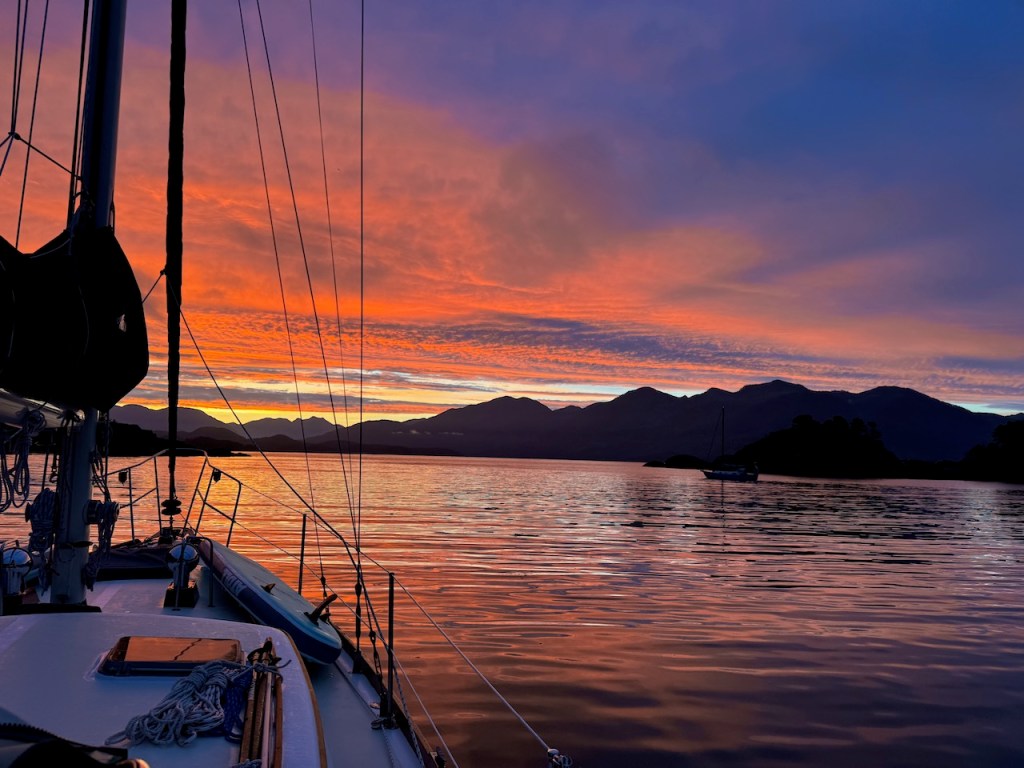
We finally entered Rosario Strait where Lopez Island stopped the swell cold and the grey marine layer finally started to burn off . With sunshine and smooth water all became instantly right in our microcosmic world. We decided to keep riding the current north past our planned anchorage—not the last time we will change our route—to Cypress Island. We are anchored in a beautiful little cove—the only boat here.
Nothing broke today. Hallelujah!



 Oceana Voyage
Leave a reply to stellarmeerkate2755ea159 Cancel reply